Learning designs refer to a variety of ways of designing student learning experiences, that is, a sequence of types of activities and interactions. It is argued that a learning design comprises the following key elements:
• Tasks that learners are required to do.
• Resources that support learners to conduct the task.
• Support mechanisms that exist from a teacher implementing it.
(1)
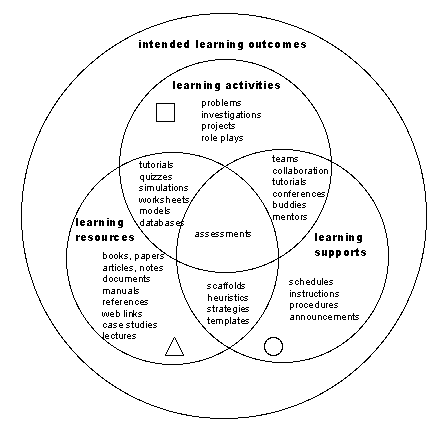
The use of ICT’s can serve as the resources and support mechanisms used to enhance students learning experiences with tasks. These experiences are what drive students engagement in the course content and promote the outcome of learning (1).
For me, I see the use of ICT’s as critical to my learning experience. As a distance education student, the role of the internet and ICT’s is vital to my ability to communicate, source appropriate data, and complete my degree successfully. The e-learning tools/methodologies provide me with a better concept of how I learn best and the tools available to me in terms of achieving my educational goals. Likewise, teachers can use these methodologies of a way of determining how to engage their students and construct programs that allow them to effectively target meaning and purpose to individual students. With the utilities available through ICT’s anything is possible.
References
1)http://www.learningdesigns.uow.edu.au/project/learn_design.htm
REFLECTIONS
How important are ICT's in the construction of learning designs in the information age?


No comments:
Post a Comment